
Know Thy Place
May 2026

Outline
Foreword
—Entry 1 - History Rhymes
—Entry 2 - Couple ‘o Anecdotes
—Entry 3 - Town Limits
Citations
Afterword
Foreword
"As they listened they began to understand the lives of the Forest, apart from themselves, indeed to feel themselves as the strangers where all other things were at home"
— J.R.R Tolkien, The Fellowship of the Ring
Let's start here, a favorite quote of mine that captures the distilled spirit of what I'd like to discuss. In the context of this passage, Tolkien channels the best transcendentalists and beckons the Fellowship, and the reader, to a divine and ineffable forest. Though the hobbits' connection to the land and the unique paradise of The Shire is detailed in length throughout Tolkien's novels, even they stand to deepen their awareness of their surroundings. Let us listen, let us learn, let us grow. It is precisely this inquisitive sentiment —which echoes daily in my brain—that I aim to convey the importance of here in the following entries. These entries are about place. Where you are, when you are there, and what you know…or don’t.
Entry 1
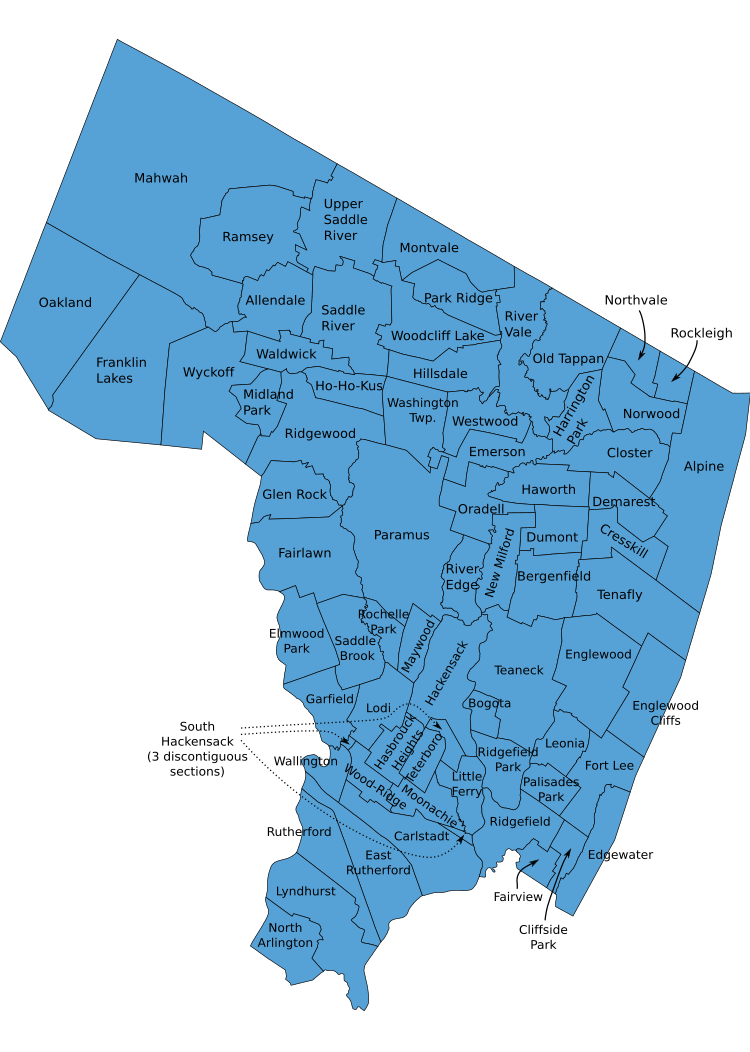
My “new” place is not far from my “old” place; about 3 miles northeast if we are being specific. Being further specific, it is Lower Bergen County, as opposed to Eastern Essex County. It is bounded to the East by the brackish wetlands of the Meadowlands, the long-polluted and somewhat-revived Passaic River to the West, the City’s often-clogged artery, State Route 3, to the South, and a truly bizarre slew of tiny municipalities to the North. Traveling North from my apartment, if I stay in the polygon bordered by the Passaic River, Interstate 80, and the New Jersey Turnpike, I can encounter 12 completely distinct municipalities, many of which are Boroughs, and many of which have separate police, fire departments, EMS services, schools, and other municipal services and functions.
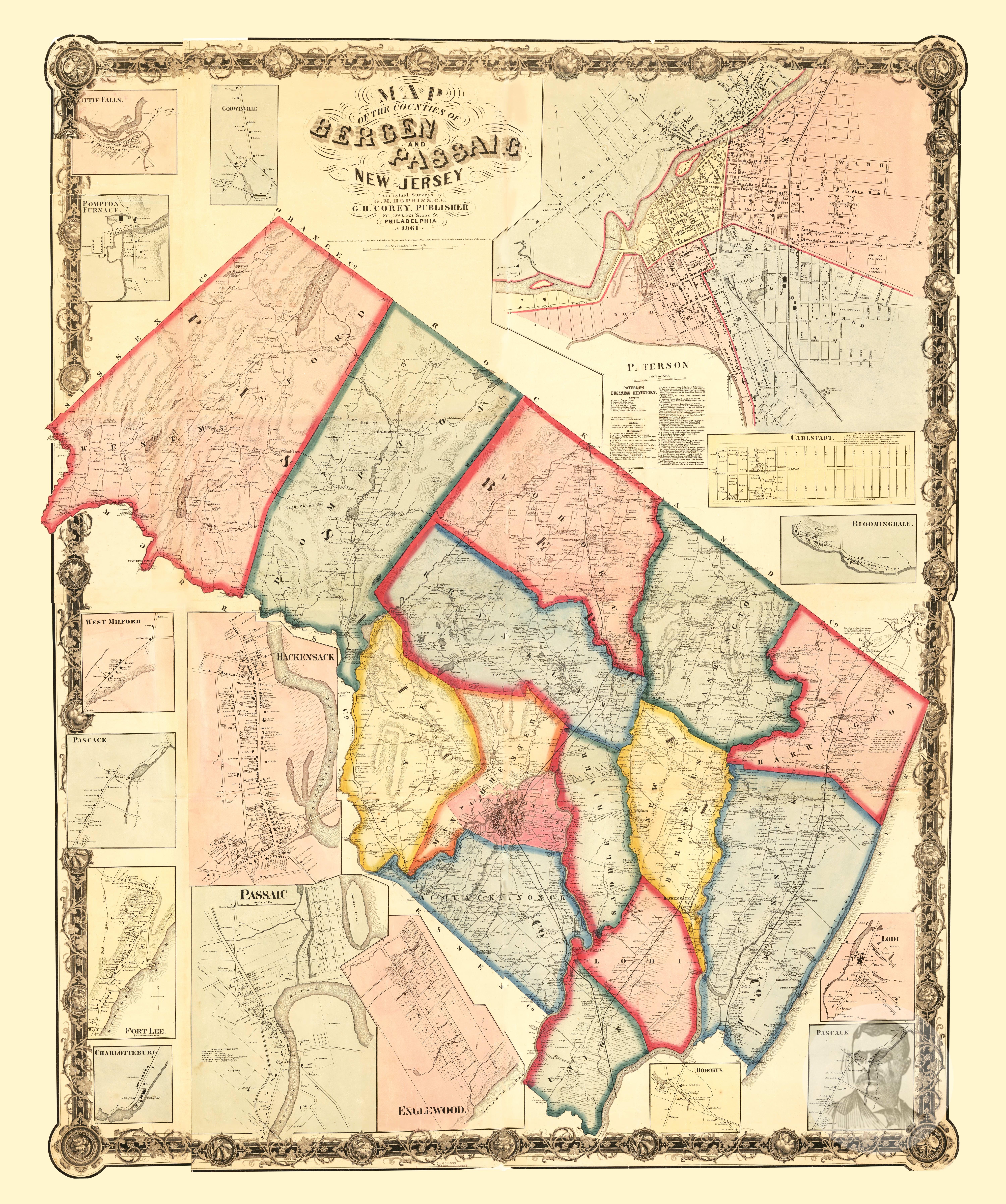
Bergen County has 70 municipalities, despite being the 7th smallest county in the state (233.01 sq miles). Meanwhile the largest county, Burlington (798.58 sq miles), has only 40 municipalities. And just in case the oddity of this isn’t sinking in, Mercer County (224.56 sq miles), which is closest in size to Bergen, only has 12 municipalities. The fascinating part is that this isn’t by chance. To keep it short, Bergen County was the birthplace of an 1890’s phenomenon later-dubbed Boroughitis. Due to the county’s growing commuter hubs and their commuters’ demands for infrastructure improvements, surrounding rural landowners’ disinterest in supporting increased infrastructure costs and desires to control education, legislation was passed that allowed for portions of larger municipalities to form independent boroughs and effectively secede physically and financially from the larger municipalities; this led to a race across the state to rapidly form boroughs before the legislation was eventually updated.
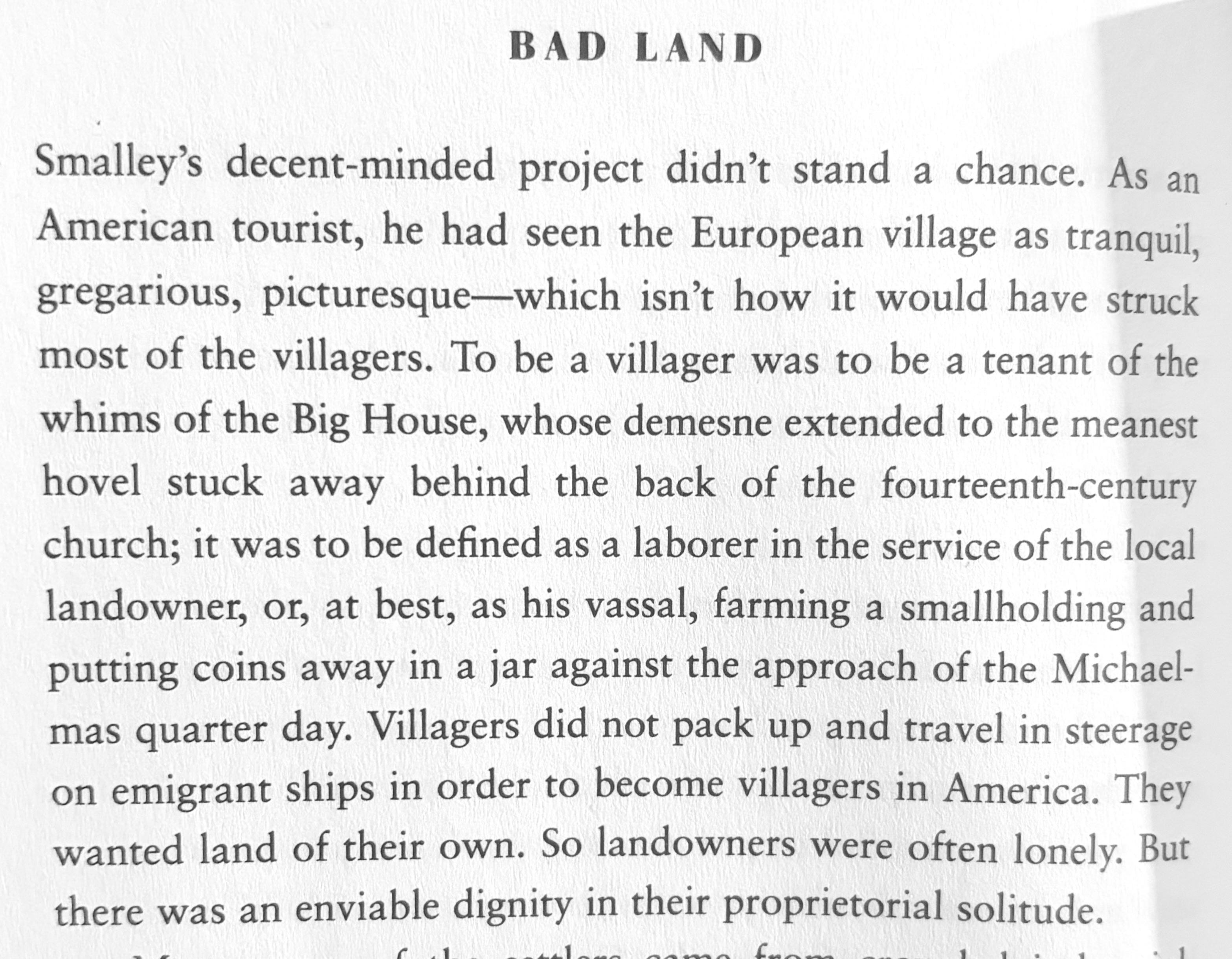
Learning of this historical footnote and the politics, socioeconomics, and cultural powers at play opened my eyes with new clarity to the effects this period has had to shape the world I inhabit today. Mark Twain’s famously quoted line, “History rarely repeats itself, but often rhymes” is wonderfully true. The disagreements of the time were not limited to New Jersey. In reality, these were fundamental clashes over the lofty ideals of the United States; freedom, independence, and prosperity. Jonathan Raban’s Bad Land: An American Romance spends a few pages discussing an article from 1893 titled “The Isolation of Life on Prairie Farms”; the article’s Dakota-based writer argued for a return to European collective agrarian villages and laments the struggling individualism of the many lone homesteaders of the Great Plains.
The seeds of rural clashes with cosmopolitan interests, disagreements over education freedoms, and appropriation of tax dollars, were all planted long ago and yet we are still subject to identical conversations today. If you watched any snippet of this past year’s gubernatorial debates, you saw candidates jousting on the question of New Jersey’s affordability. The topic is firmly tied to the fad of boroughitis and the long-lasting impacts to the cost of public services here in the country’s most densely populated state.
Entry 2
Growing up, both of my parents had a real geographic intuition, or at least that’s what I’ll call it. When it came to directions, proximities, landmarks, detours, and other aspects of gettin’ around, they just knew what they were doing. Given that this was a time when MapQuest was nascent, an atlas map was still in our trunk, and my dad didn’t even have a flip cell phone until almost 2008, maybe this skillset is more common and less remarkable than I think. Nonetheless, the experience of traveling with my parents, whether locally or on longer trips in neighboring states, made my young jostling-in-the-backseat self feel like we were never lost and—if I just paid enough attention to my surroundings— I too would never have to be lost. This act of imprinting left me with that sense of certainty, but also with a complete sense of bewilderment when presented with people who seem easily lost and don’t seem to absorb any elements of their place.
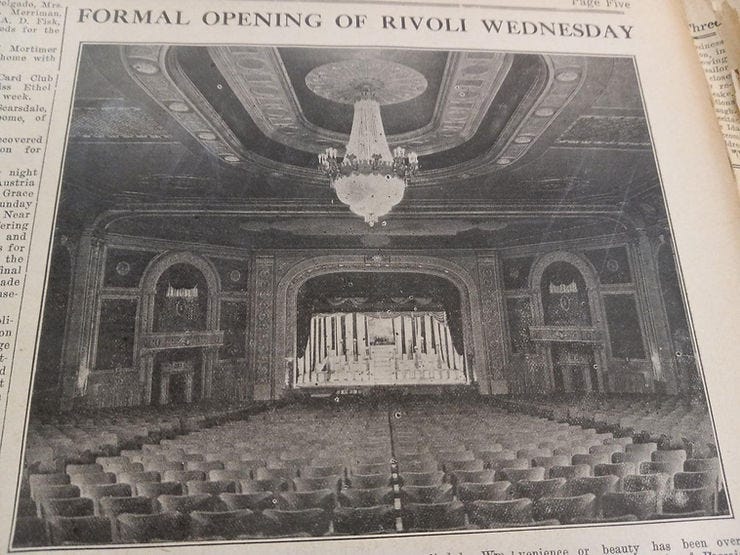
Case 1 — My coworker was raised a town away from where I live now (yes, it is another borough in Bergen County). Because I am relatively new to the area, by comparison, I have connected with this person through inquisitive pokings— information on local restaurants, traffic patterns, bits of history, and the like. I’ve noticed, after the initial surprise, people tend to light up when an outsider knows something about their place, and even more so when they can teach someone about their place—I really enjoy both types of exchanges. Because we’ve connected at length over our shared locale, a particular conversation left me perplexed. Somehow, the topic of the neighboring town’s once-grand 20th century theatre, then-defunct cinema, now-reviving artist-run community arts space came up (Williams Center - Rutherford). The coworker exclaimed, “Oh you mean the place with the strippers?!”.
Enter incredulity. This person, who grew up just minutes away, didn’t have the slightest knowledge of the fire that decimated the original structure in the ‘70s, the acclaimed hometown poet to which the center owed its namesake, and least of all, the sincere revival efforts, community-building, and creativity churning out of this space in its latest transfiguration. The only inkling they had— that still being half-wrong at-best—was of the occasional drag-themed bingo, performance, or concert that the center hosts. Not long after this conversation, coworker X moved to an even denser city, to a neighborhood well-known for its current gentrification kick. What does the fabric of a place look like when you discard the generational knowledge?
Case 2 — After a brief unmoored period, a close friend moved back to the Garden State and into an area of North Jersey just a few towns over from my hometown. This friend embarked on the media pilgrimage that most North Jerseyans know and love, The Sopranos. Months passed and my friend finally finished the series and has been exploring the broader neighborhoods and adjacent towns near their new digs. On the day they watched the finale—the final scene being shot in an ice cream shop in the town-next-door to my hometown— I joked that the two of us should go sit in the infamous booth. Much to my confusion, my friend was not interested in driving all the way to Boonton, NJ for that. After letting them know that the correct location is in Bloomfield, NJ, a mere ten-minute drive, they proceeded to question and practically argue with me. A Google put it to bed. I recall this here with silly chiding in mind, nothing too serious to dissect, though I will say there is something intriguing about the certainties with which some people approach the world.
Entry 3
When I think of personal change, I often look back in large chunks of time, hurdling through those milestone years marked by graduations, deaths, jobs and such—the big ones. Lately, I have experienced what I would call an acute change, it has only come to light in a couple years, and I’ve realized it quickly after it occurred.
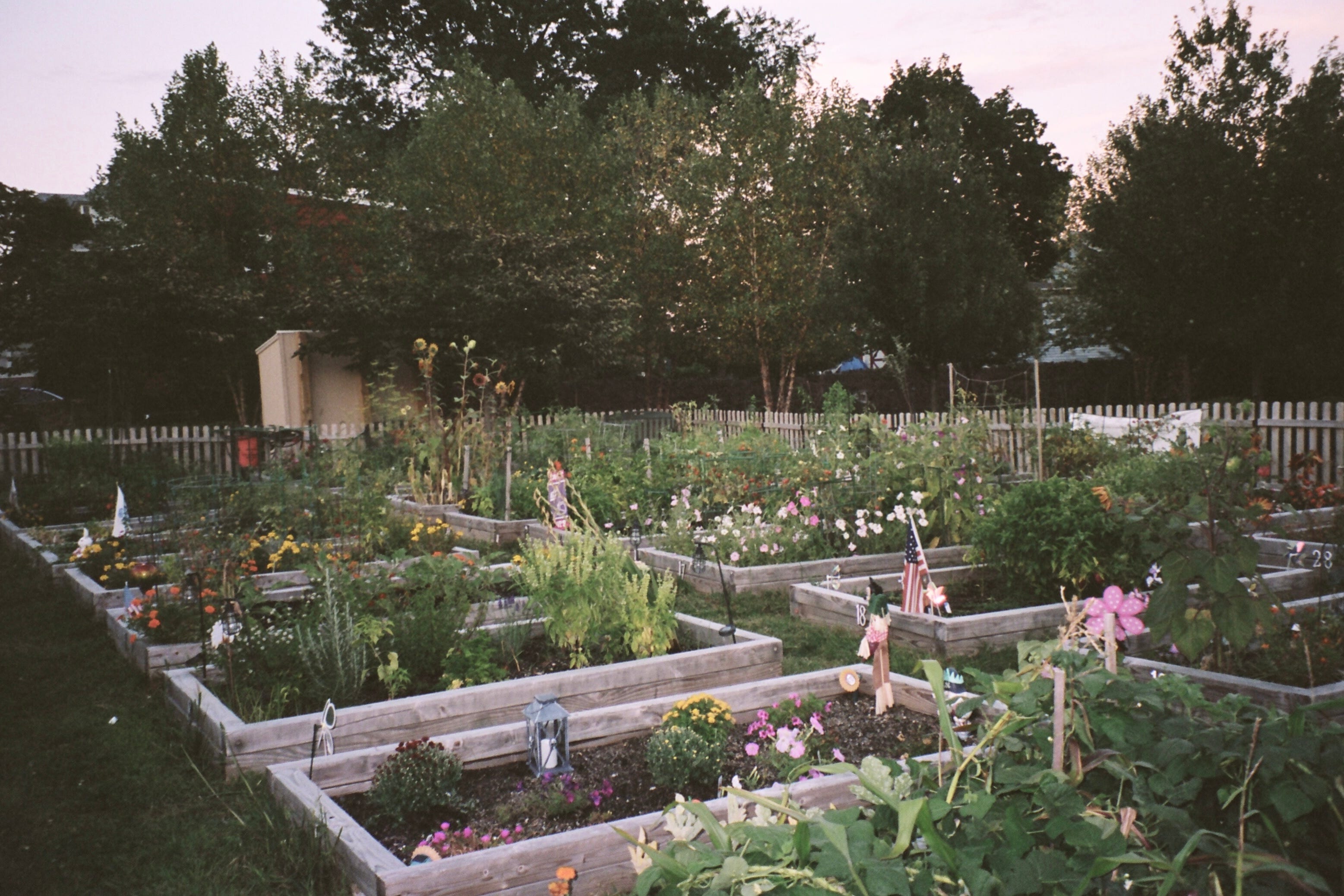
In my hometown, to be engaged in the community was to be known, and to be known was to be judged. For this reason, despite being highly opinionated, fairly righteous, and somewhat confident, I never extended myself into community projects, activism, or politics. This approach resulted in growing reproach for municipal inertia and, as I saw it, the lack of vision, creativity, and novelty being implemented in my small town. Moving out, while at the time feeling like a woefully bittersweet decision, offered new independence, control, and opportunity to start something new. After completing our winter move-in and piece-by-piece starting the process of building our space, my partner learned of a new project in town, a community garden. Everyone that knows us knows that she is a gardener, educator, activist, and long-standing eco-whizz, so naturally, we jumped at the opportunity to secure a plot. For me, this would be a learning experience (my favorite type of thing), made only better by the fact that my partner has the knowledge to share. In the first year, we attended the awkward inaugural opening day, sowed our plot and tended it, noted the less-than-ideal garden layout, fought with the finicky watering system, observed bizarre horticultural choices, and navigated the unpredictable garden-wide communications, to find ourselves thoroughly invested in this new garden and its cast of characters.
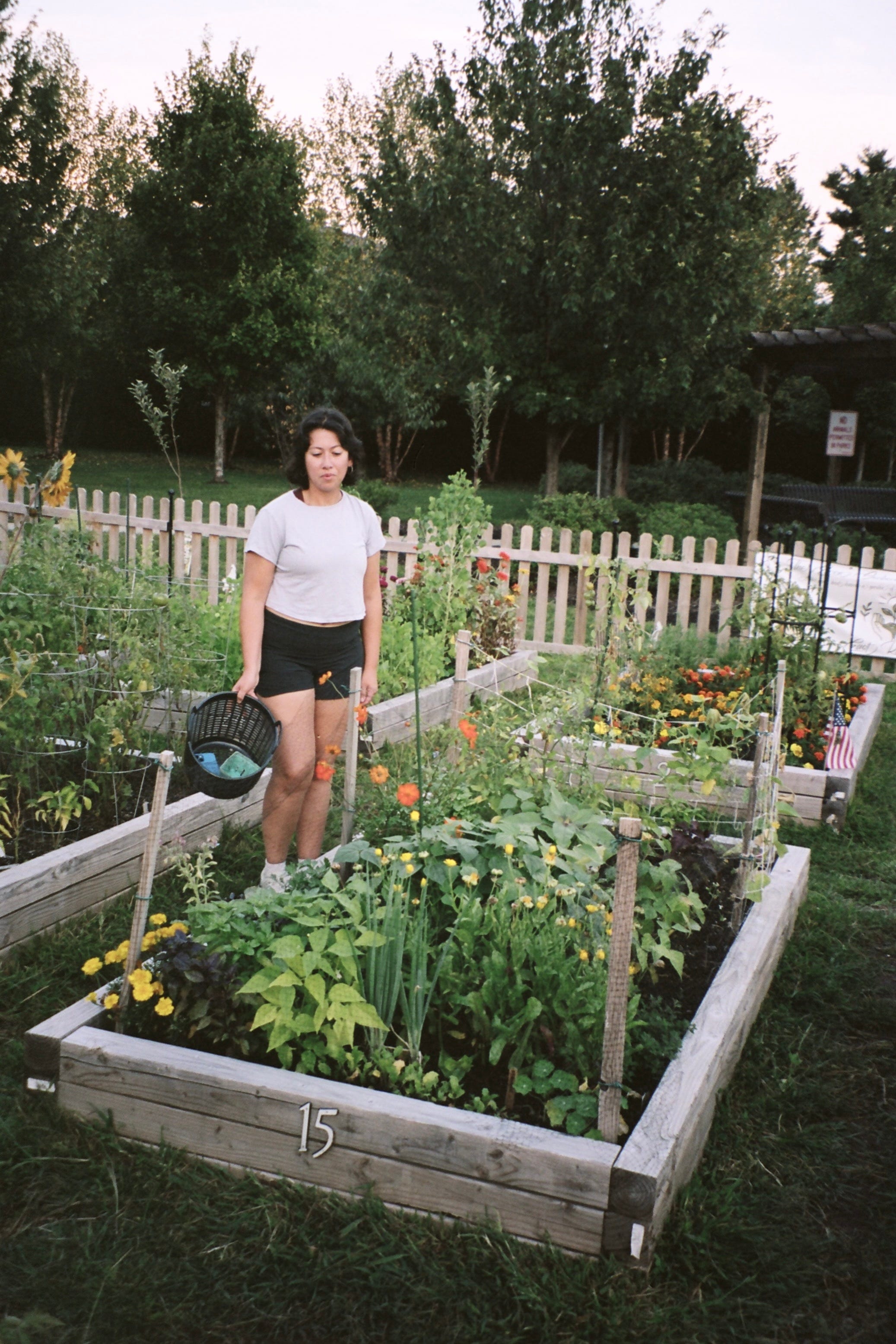
With year two on the horizon, I started to feel myself ruminating on some of the same disappointments that I first experienced in my hometown, but, while still a cynical person, my mindset has adjusted. I really do believe that at the town-level, decision-makers truly care about their place and its people. What caring can’t always outweigh is ignorance and a lack of resources and fresh ideas. I decided to reach out and get my partner and I involved in the nascent Green Team in town— the folks responsible for this lone garden. While I don’t know where this will go, I can say that thus far, they have proved my point about “carers”, and surprised me with their excitement for someone of our age to show up. I know that both of us have a lot to offer in terms of creativity, energy, communication skills, and general newness so I am optimistic for what this little green oasis can become. There’s something to be said for having a vested interest, and hopefully I have said some of it here.
Citations
For the wiki-readers: "Boroughitis." Wikipedia: The Free Encyclopedia, Wikimedia Foundation, 20 Mar. 2026, en.wikipedia.org/wiki/Boroughitis
For the video-oriented: Gibson, Geoff. "Why This Massive City Is Hiding In New Jersey." YouTube, uploaded by Geography By Geoff, 2026, www.youtube.com/watch?v=mzohouMgODo.
For book-readers: Raban, Jonathan. Bad Land: An American Romance. Pantheon Books, 1996.
Afterword
I am trying a different style of writing and formatting here. I have had the idea for this writing in my head for quite some time but neglected to take action. In a serendipitous twist, I think it needed to stew a little longer for me to actually experience some of the things discussed above and tie them together. This type of synthesis and reflection always feels like a brain-scratch for me. As a result, the length grew and I felt I needed to break it up in a logical way. I must give formatting inspiration credit to Sam Mohite from Pierogi Pinay. She is a very cool Rutgers alumnus who I had the pleasure to cross paths with for a brief stint during my TEDxRutgers days; how often do you see someone who has an undergraduate degree in astrophysics AND the bio, “multiethnic librarian archivist movement artist model writer”? I highly recommend you spend a few minutes perusing her Digital Diaries series; it is thoughtful, detailed, and elegantly compiled. I particularly enjoyed some of her thoughts on finding annotations in used books and the connection that brings.
Go green team!